
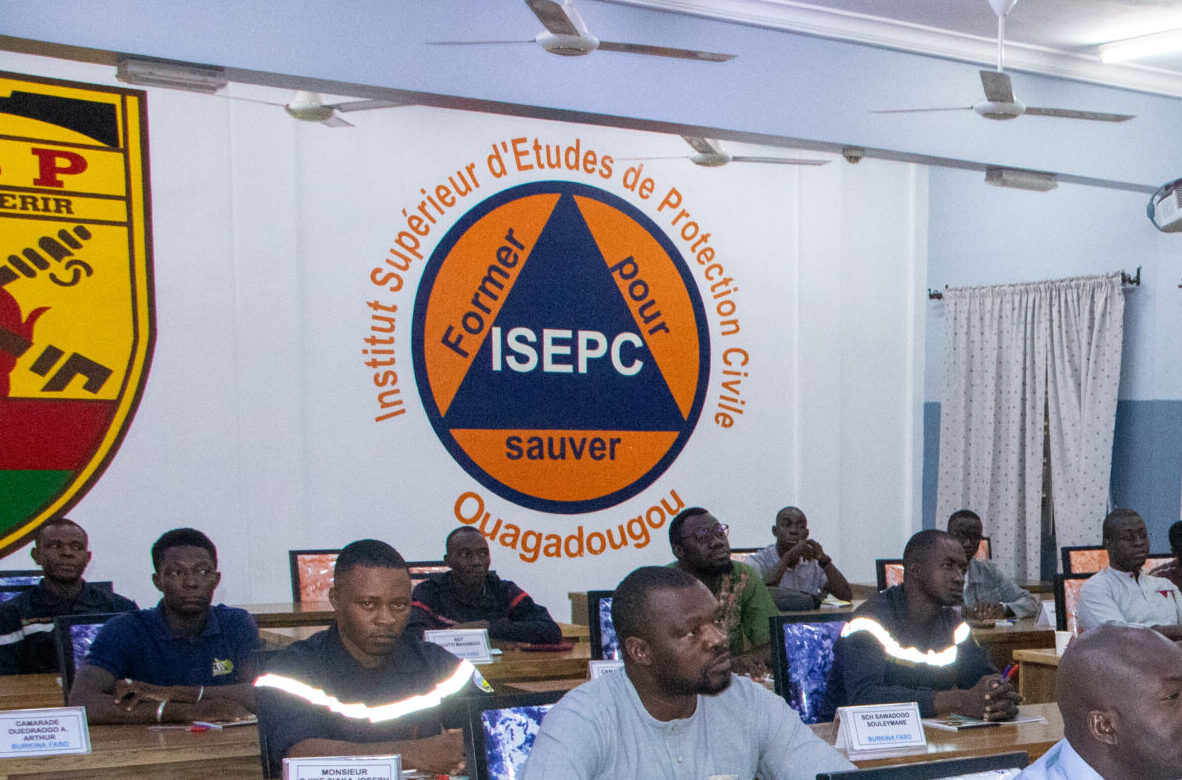
On October 5, 2026, the Higher Institute of Civil Protection Studies (ISEPC) in Ouagadougou launched a new session of the “Prevention 1” course. Scheduled to run until October 16, 2026, this training aims to enhance participants’ knowledge and skills regarding the prevention of fire and panic risks.
Prevention is a cornerstone of safety for people, property, and infrastructure. It is within this framework that the Higher Institute of Civil Protection Studies in Ouagadougou is hosting participants for a new session of the “Prevention 1” course from October 5 to 16, 2026.
This training aligns with the Institute’s mission to develop and strengthen the skills of professionals tasked with operating in various fields of civil protection.
Developing a genuine culture of prevention
In the realm of safety, preventing a risk primarily involves the ability to identify and assess it, and to implement the necessary measures to reduce the likelihood of its occurrence or limit its consequences.
The “Prevention 1” course enables participants to acquire and consolidate essential knowledge for understanding prevention mechanisms, particularly concerning fire and panic risks.
During this session, trainees will delve into various aspects of prevention, risk analysis, and safety measures applicable to facilities and infrastructure.
The goal is to enable them to develop a methodical and rigorous approach to situations that could pose a risk to people or property.
Training combining theoretical knowledge and practical application
Over the course of the two-week training program, participants will benefit from a curriculum combining theoretical instruction, case studies, and practical applications. This pedagogical approach is designed to enable them not only to master the fundamental principles of prevention but also to understand how to implement them in real-world situations. Guided by experienced instructors, trainees will develop their ability to observe environments, identify risk factors, analyze existing safety systems, and propose appropriate measures. This blend of theory and practice is a cornerstone of the training program at the Higher Institute for Civil Protection Studies in Ouagadougou. It helps prepare professionals capable of applying their knowledge to their duties and effectively contributing to the improvement of prevention systems within their respective organizations. Anticipating for better protection Prevention plays a vital role in civil protection. It allows for action to be taken before events occur, thereby reducing the exposure of people and infrastructure to various risks. Mastering prevention guidelines, identifying hazards early, and implementing appropriate measures all contribute to creating safer environments. Through this training, participants are encouraged to cultivate a genuine culture of anticipation and risk management. The goal is not merely to know how to react to an event, but also to be able to act before it happens—identifying vulnerabilities and proposing measures to prevent accidents or mitigate their consequences. Skills serving organizations and communities Beyond the knowledge gained during the training, the ultimate aim is for that knowledge to be put to use within various professional organizations. The skills developed during the “Prevention 1” course are intended to help improve safety and prevention practices. Participants will thus be able to play a key role in identifying risks, applying safety rules, and guiding their organizations in implementing appropriate measures.This skills development initiative contributes more broadly to capacity building for stakeholders in the fields of civil protection and security. The ISEPC continues its mission of training and capacity building By organizing the “Prevention 1” course, the Higher Institute for Civil Protection Studies in Ouagadougou (ISEPC) upholds its commitment to rigorous professional training that is tailored to field realities and contemporary security challenges. In doing so, the Institute contributes to the training and professional development of individuals who will assume responsibilities across various areas of civil protection. This new session also provides a forum for participants to share experiences and acquire new skills, offering them the opportunity to strengthen their knowledge and operational capabilities throughout the course. The training will run until October 16, 2026, featuring a series of instructional modules designed to progressively consolidate the trainees’ learning. Through its training programs, the Higher Institute for Civil Protection Studies in Ouagadougou reaffirms its commitment to fostering competent professionals and continuously improving practices in the fields of prevention and civil protection.
Higher Institute for Civil Protection Studies in Ouagadougou — Training to save lives!