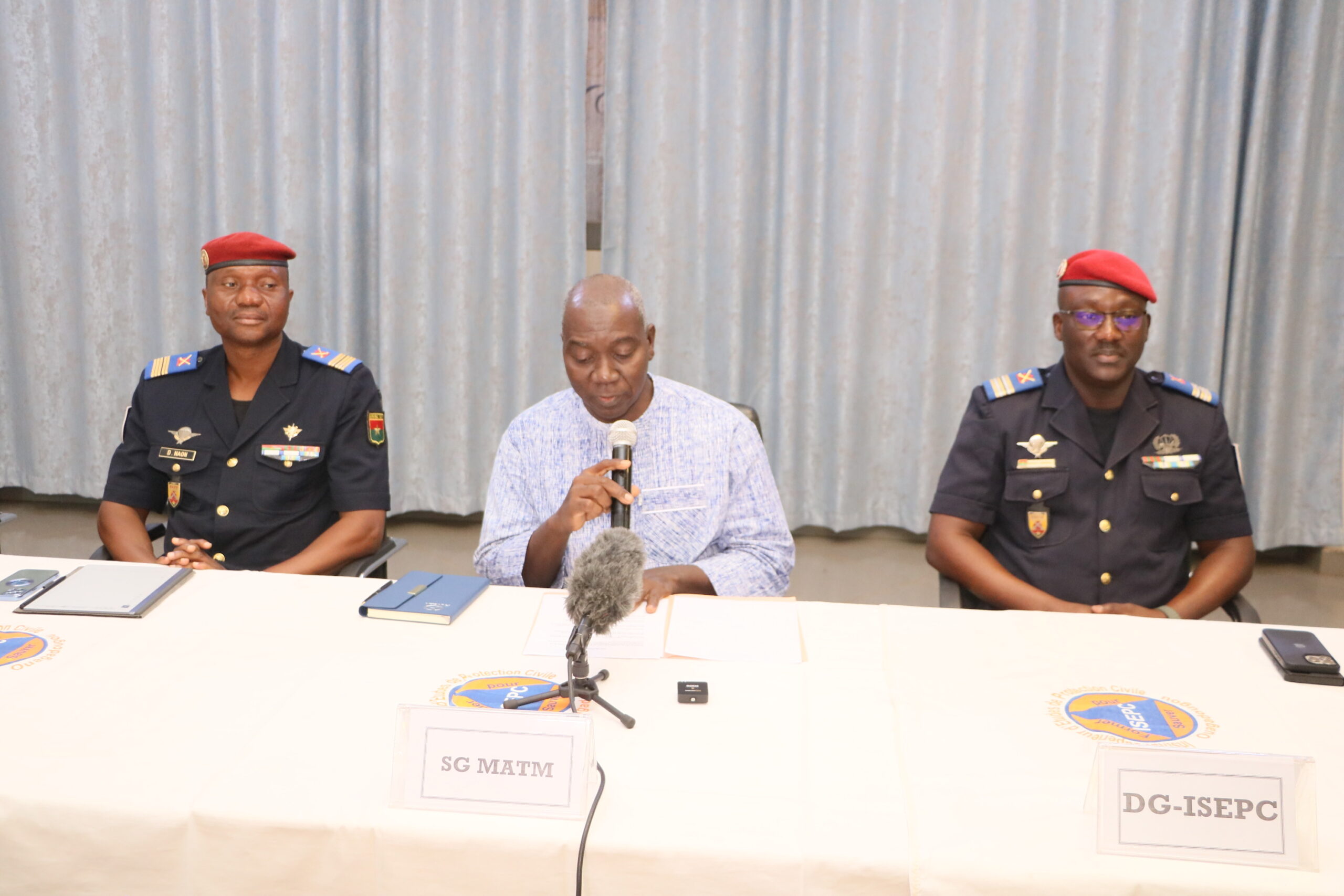
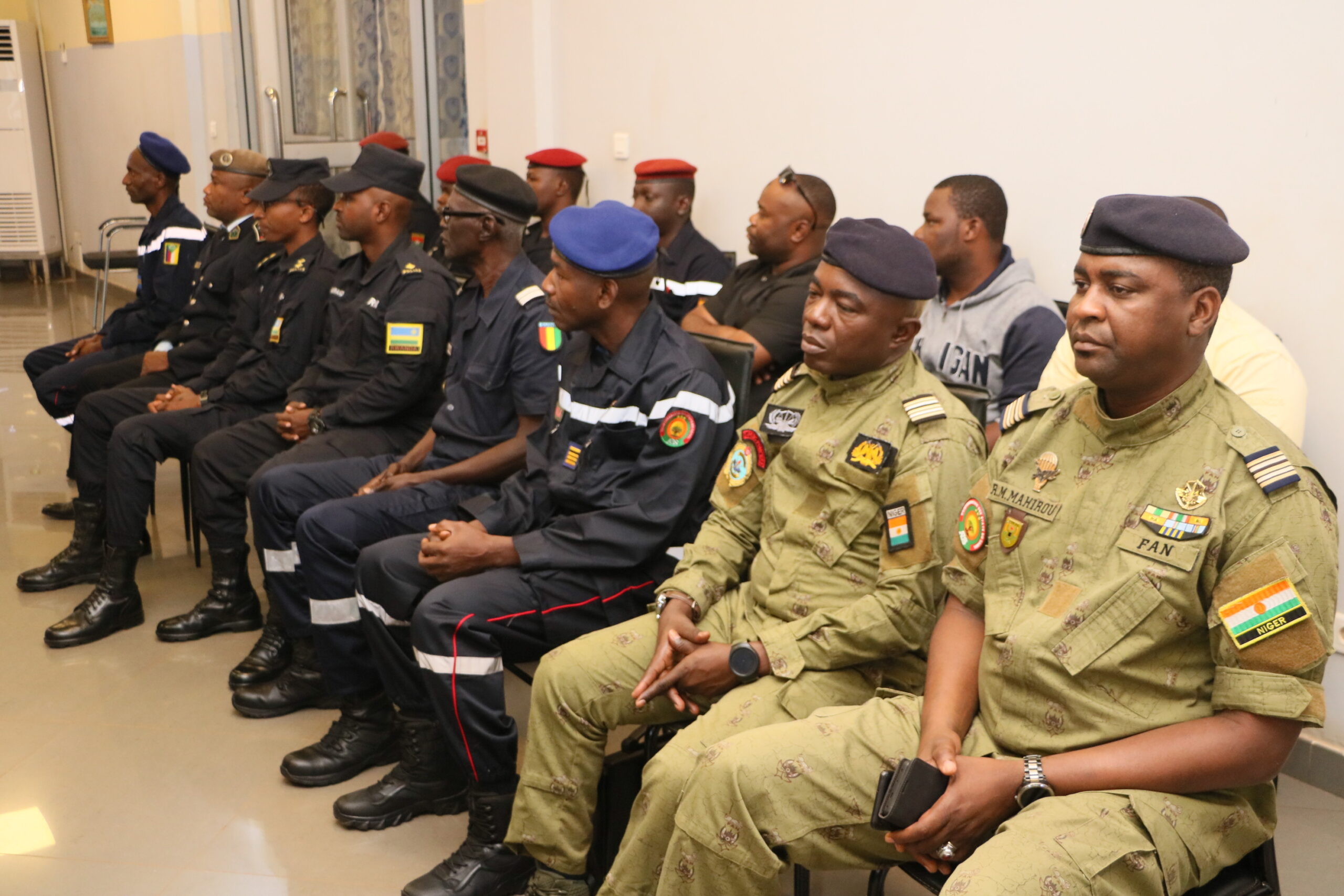
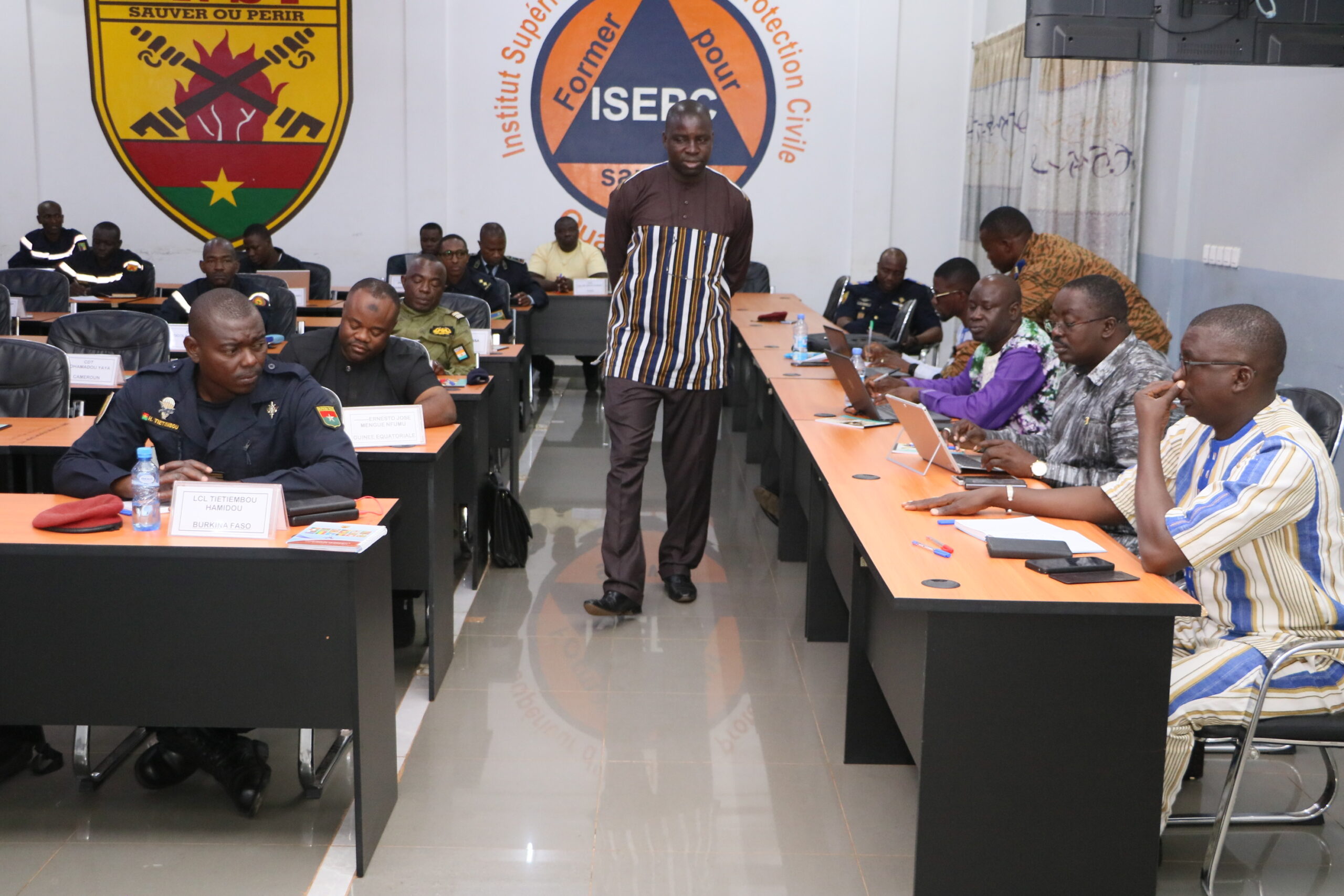
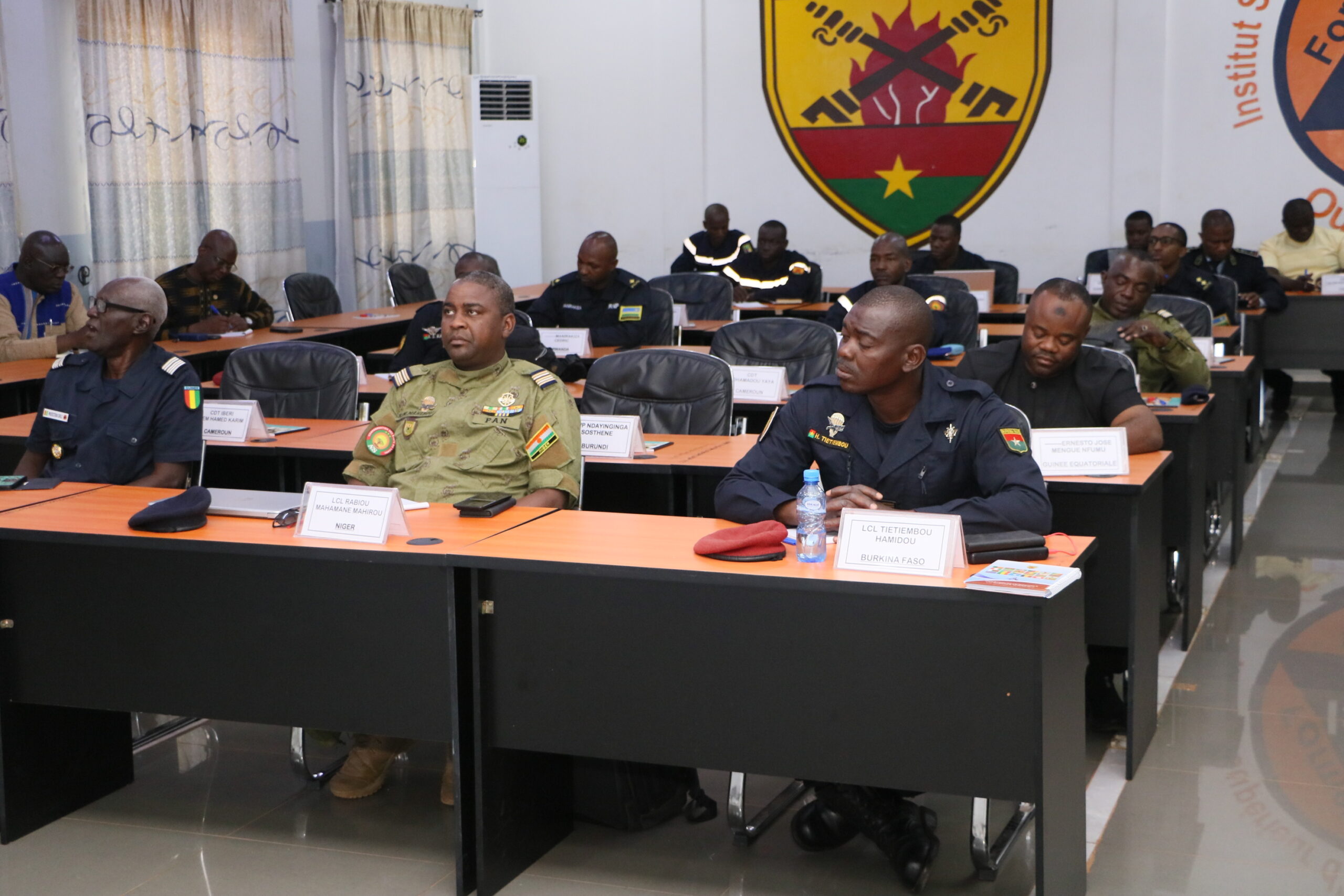
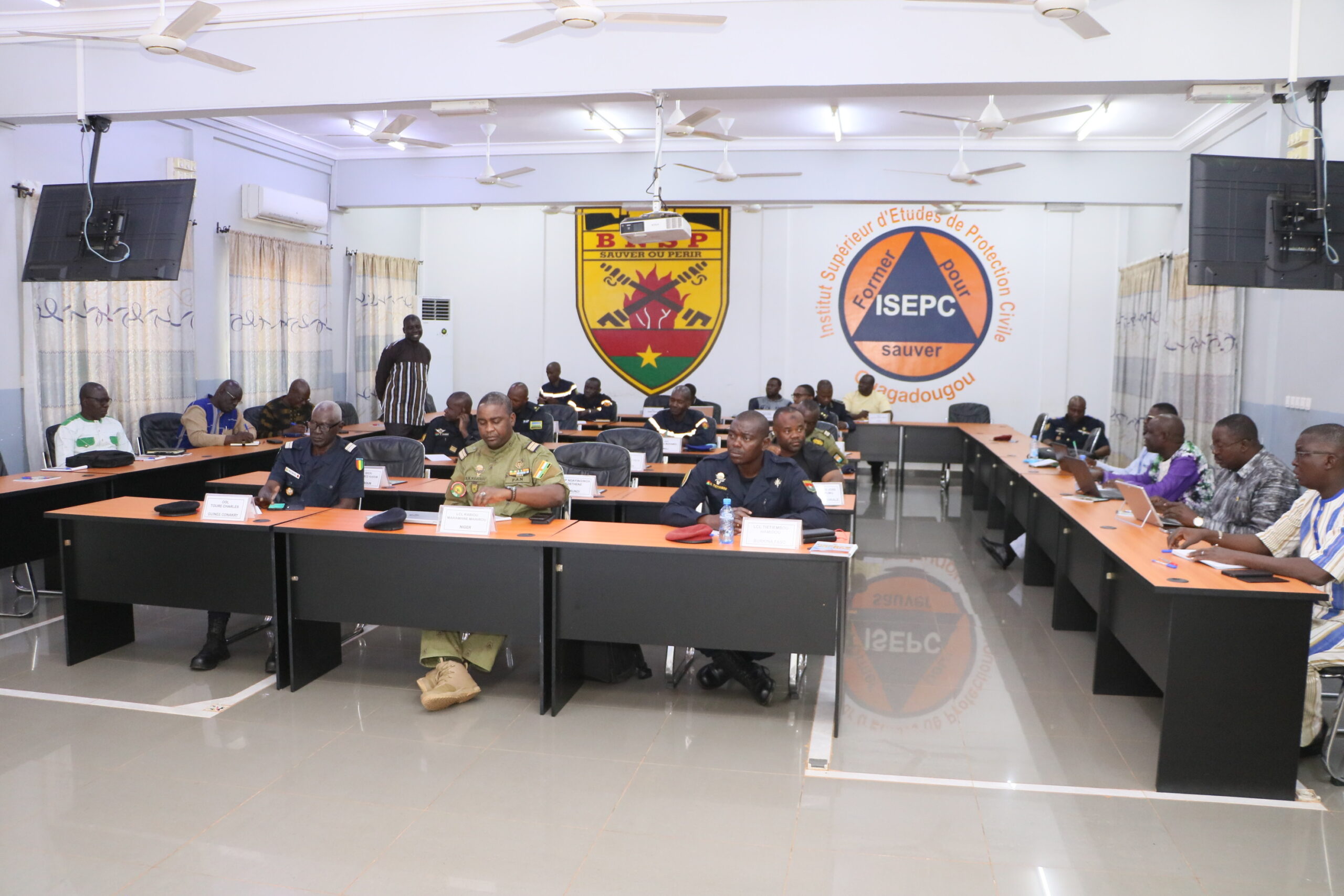
The Higher Institute of Civil Protection Studies (ISEPC) hosted the official launch ceremony for the international training course in “Crisis and Disaster Management” on Monday, October 6, 2025. Chaired by the Secretary General of the Ministry of Territorial Administration and Mobility, Saïdou Sankara, this activity marks the beginning of a large-scale training program bringing together some twenty participants from thirteen countries: Burundi, Cameroon, Comoros, Congo-Brazzaville, Gabon, Guinea Conakry, Equatorial Guinea, Mali, Niger, Rwanda, Senegal, Chad, Togo, and Burkina Faso. This training, both theoretical and practical, aims to strengthen the skills of managers and technicians in the prevention, preparation, and management of emergency situations. In his opening address, the Secretary General of the Ministry of Mobility, Saïdou SANKARA, welcomed the holding of this session, which he said reflects the government’s commitment to investing in training and international cooperation in risk and disaster management. “This training demonstrates the importance our country attaches to regional and international cooperation in combating multifaceted crises,” he said, while encouraging the trainees to make the most of the lessons they will receive.
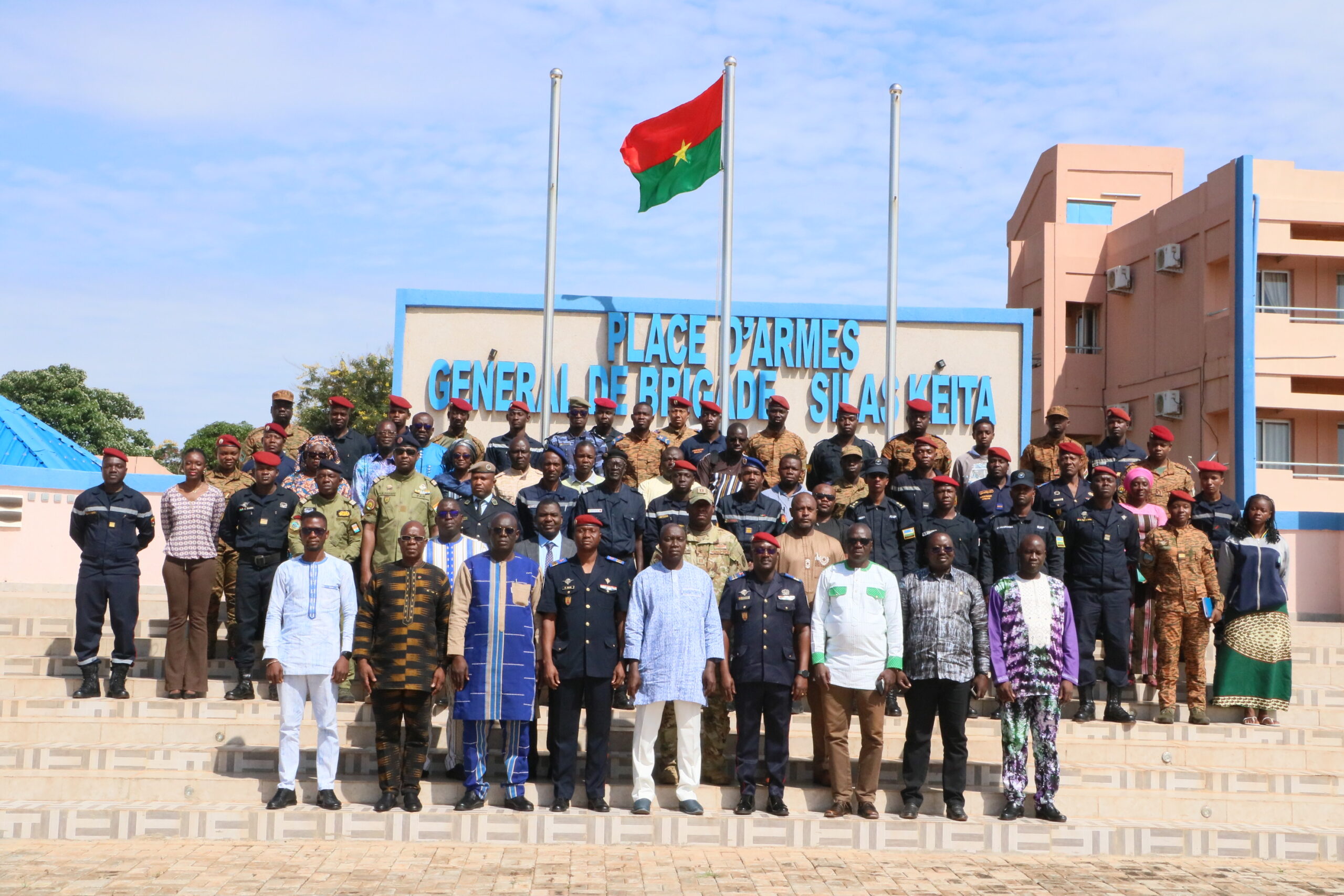
The Director General of the Higher Institute of Civil Protection Studies, Lieutenant Colonel Zouno Gérard BAMBARA, extended a warm welcome to all participants. He recalled that the Institute, thanks to the quality of its supervision and its practice-oriented teaching approach, remains a recognized center of excellence in the sub-region. “We are taking a strong step towards strengthening resilience and solidarity in crisis and disaster management, so that our societies are better prepared and protected,” he said.The training’s co-director, Dr. Natéwindé Sawadogo, presented the content of the training program, which is structured around four components. He specified that participants will be equipped on topics such as the general framework of civil protection and generalities, operational professional content, emerging risk challenges, and reflections on humanitarian action in disaster situations. He also reiterated the importance of this training in light of the growth and intensity of hazards. “Civil protection is at the heart of this response, as it protects lives, helps reduce losses, and promotes a faster resumption of normal activities,” Dr. Sawadogo emphasized.The ceremony ended on a note of optimism and commitment, with a family photo symbolizing the spirit of solidarity and cooperation that characterizes this internship. For two weeks, the interns will be immersed in practical and strategic thinking, under the supervision of experienced instructors. The ISEPC thus reaffirms its leading role in building a culture of prevention and resilience in the face of crises and disasters.
ISEPC: training to save